
SEO for Therapists: What Actually Matters
Search engine optimization has a reputation problem. Most of what therapists read about SEO is written for e-commerce stores and tech startups, full of jargon and tactics that have nothing to do with how a stressed person at midnight finds someone to talk to.
Here is the truth: SEO for a therapy practice comes down to a handful of things done consistently. You can safely ignore the rest.
Think Like Your Client, Not Like a Marketer
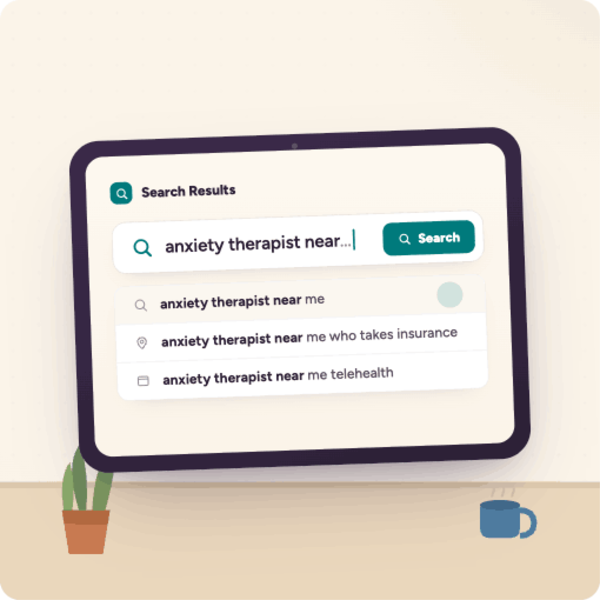
Nobody searches for “licensed clinical mental health services.” They search for “anxiety therapist near me,” “couples counseling that takes Aetna,” or “how to help my teen with panic attacks.” Every piece of SEO advice worth following starts here: use the words your clients actually type.
Make a short list of the five to ten phrases your ideal client would search, combining your specialty, your city or state, and telehealth if you offer it. Those phrases should appear naturally in your website page titles, your headings, and your profile listings. That single habit outperforms most paid SEO services.
Local Terms Are Your Best Friend
Therapy searches are overwhelmingly local, even for telehealth. “Trauma therapist in Austin” and “online therapist in Texas” are winnable searches for a solo practitioner in a way that “trauma therapist” never will be. Put your location in your page titles, mention the communities you serve in your copy, and keep your name, address, and contact details identical everywhere they appear online. Consistency is a ranking signal, and mismatched details quietly erode it.
Your Listings Are Doing SEO for You
Search engines decide how trustworthy your website is partly by who links to it. Verified professional listings are some of the most natural, legitimate links a therapist can have. Your TherapyCloud profile, your own website, and any professional association pages should all point to each other. Each verified profile also ranks in search results on its own, which means one client search can surface you two or three times instead of once. If you read our post on why therapists need more than one online listing, this is the same principle working at the search engine level.
Content Answers Questions Before Clients Ask You
A blog is not mandatory, but it is the most reliable way to grow search traffic over time. One well-written post answering a real client question, like what EMDR feels like or how to know if your teen needs therapy, can bring readers for years. Write for the client, not the algorithm. One post a month, on a question you actually get asked, beats daily posts written to hit a word count.
You do not need your own website to start. TherapyCloud's blog module lets you publish posts directly from your account and add SEO keywords to each one, so your writing is search-ready from day one and linked to your profile.
Your TherapyCloud Tools Multiply Your Entry Points
Beyond your profile, three features in your TherapyCloud account each create their own indexable, shareable URLs, and every URL is another way for a client to find you:
• Blog posts. Each post you publish gets its own URL you can share on social media or link from your website. Every post is another page working for your name and specialty in search, and the built-in SEO keyword fields do the optimization work as you write.
• Events. Workshops, groups, and talks posted on TherapyCloud each get a linkable event page. Event pages are strong candidates for local searches like “grief support group in Houston,” and sharing the URL through email and social builds traffic signals that search engines notice.
• Marketplace products. Products you list, like workbooks or downloadable resources, can link back to your own site. Each product page is both a revenue stream and a legitimate inbound link, the exact kind search engines use to judge your site's credibility.
Used together, these turn one membership into a cluster of pages that reference each other, link to your website, and give a searching client multiple doors into your practice.
What You Can Stop Worrying About
• Keyword stuffing. Repeating “therapist” forty times reads as spam to both search engines and humans. Natural language with specific terms wins.
• Chasing algorithm updates. If your site is fast, mobile-friendly, and helpful, updates mostly pass you by.
• Expensive SEO packages. Cold emails promising page one rankings are almost never worth it. The fundamentals above are things you can do yourself in a few hours a month.
SEO rewards the same things good clinical work does: clarity, consistency, and patience. Start with the search phrases, tighten your listings, answer one real question a month, and give it time to compound.