
Getting Client Reviews Without Crossing Ethical Lines
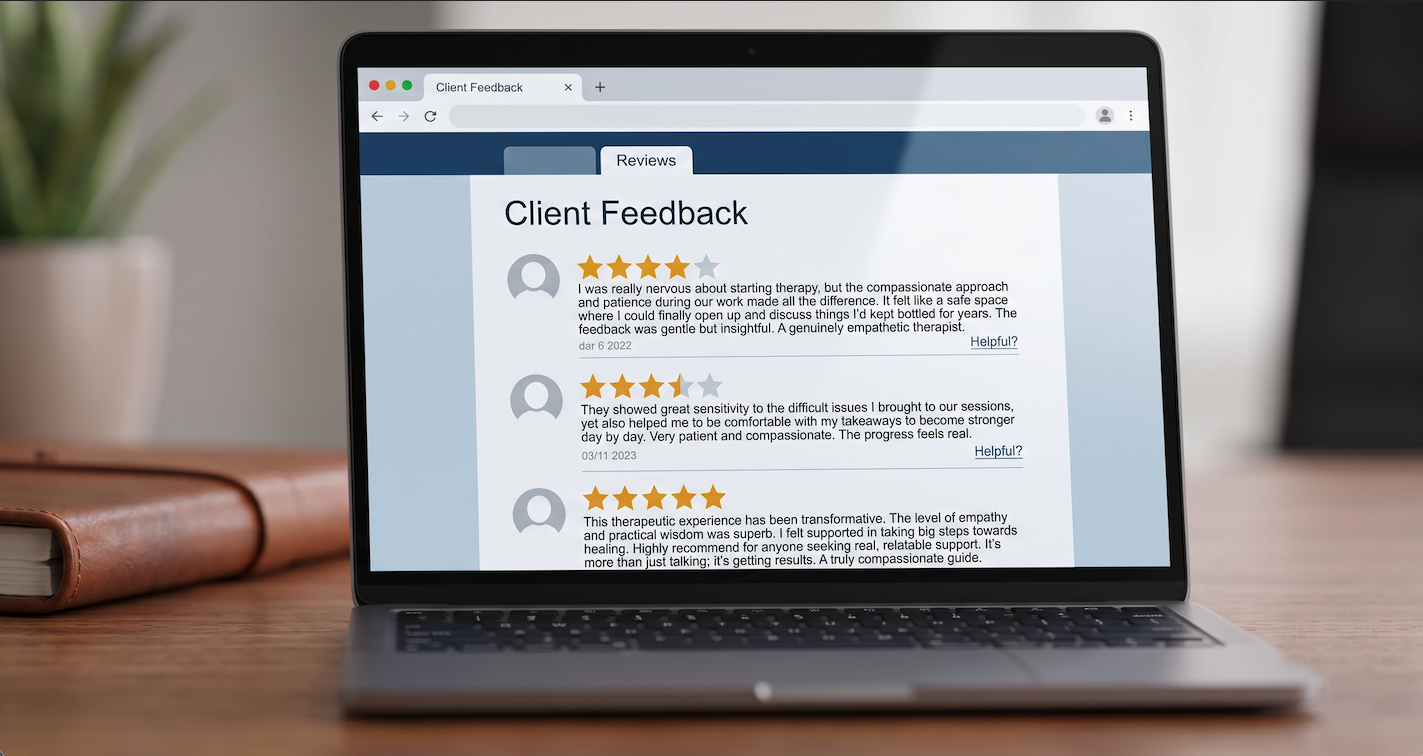
Reviews move clients. Before someone books a first session, they look for proof that other people trusted you and got better. For most businesses, the answer is simple: ask happy customers to leave a review. For therapists, that simple move can put your license at risk.
The good news is that you do not have to choose between growing your practice and honoring your ethics. You just have to build social proof differently.
Why Therapy Is Different
Professional codes of ethics, including those of the ACA and APA, restrict soliciting testimonials from therapy clients because of the power dynamic in the relationship. A client asked for a review by their own therapist may feel unable to say no, and a public testimonial can compromise their confidentiality in ways they do not anticipate when they write it.
Confidentiality also cuts the other way. If a review appears online, you cannot respond in any way that confirms the person was ever your client. Even replying “Thank you for the kind words about our sessions” is a disclosure. When in doubt, check your own board's rules and your specific code, because requirements vary by license and state.
What Not to Do
• Do not ask current or former clients for public reviews or testimonials. This is the clearest line, and the one most often crossed by well-meaning therapists copying marketing advice written for other industries.
• Do not incentivize reviews. Discounted sessions or gifts in exchange for a review compound the ethical problem.
• Do not respond to public reviews with anything that confirms a therapeutic relationship. A neutral, general reply or no reply at all protects the client, even when the review is negative or false. If a therapist absolutely must reply (e.g., to a scathing 1-star review), it must be completely standardized and boilerplate, such as: "Due to professional ethics and confidentiality laws, we cannot confirm or deny whether any individual is a client at our practice. We take all feedback seriously..."
Ethical Ways to Build Social Proof
You have more options than you might think:
• Let clients speak on their own initiative. A client who independently chooses to post a review on a public platform has made their own decision. The line is solicitation, not the existence of reviews.
• Use private, structured client feedback. Tools like TherapyCloud's integrated client feedback let you gather honest input inside the therapeutic relationship, where it belongs. It improves your work, and phrases like “feedback-informed practice” on your profile signal quality without exposing anyone.
• Collect professional endorsements. Colleagues, supervisors, and consultation partners can speak to your skills without any confidentiality concerns. Peer endorsements also drive referrals, which are often better-fit clients than search traffic.
• Show your expertise instead of telling. Blog posts, workshops, and community involvement give prospective clients a way to experience your voice and judge your competence for themselves. Content is the testimonial you are allowed to write.
The Trust You Build Instead
A wall of five-star reviews is not the only way to look trustworthy, and in therapy it is not even the best way. A complete, verified profile, a warm and specific bio, visible peer connections, and a steady stream of helpful content tell a prospective client everything a testimonial would, without asking anyone to trade their privacy for your marketing.
Protect the relationship first. The practice growth follows.