
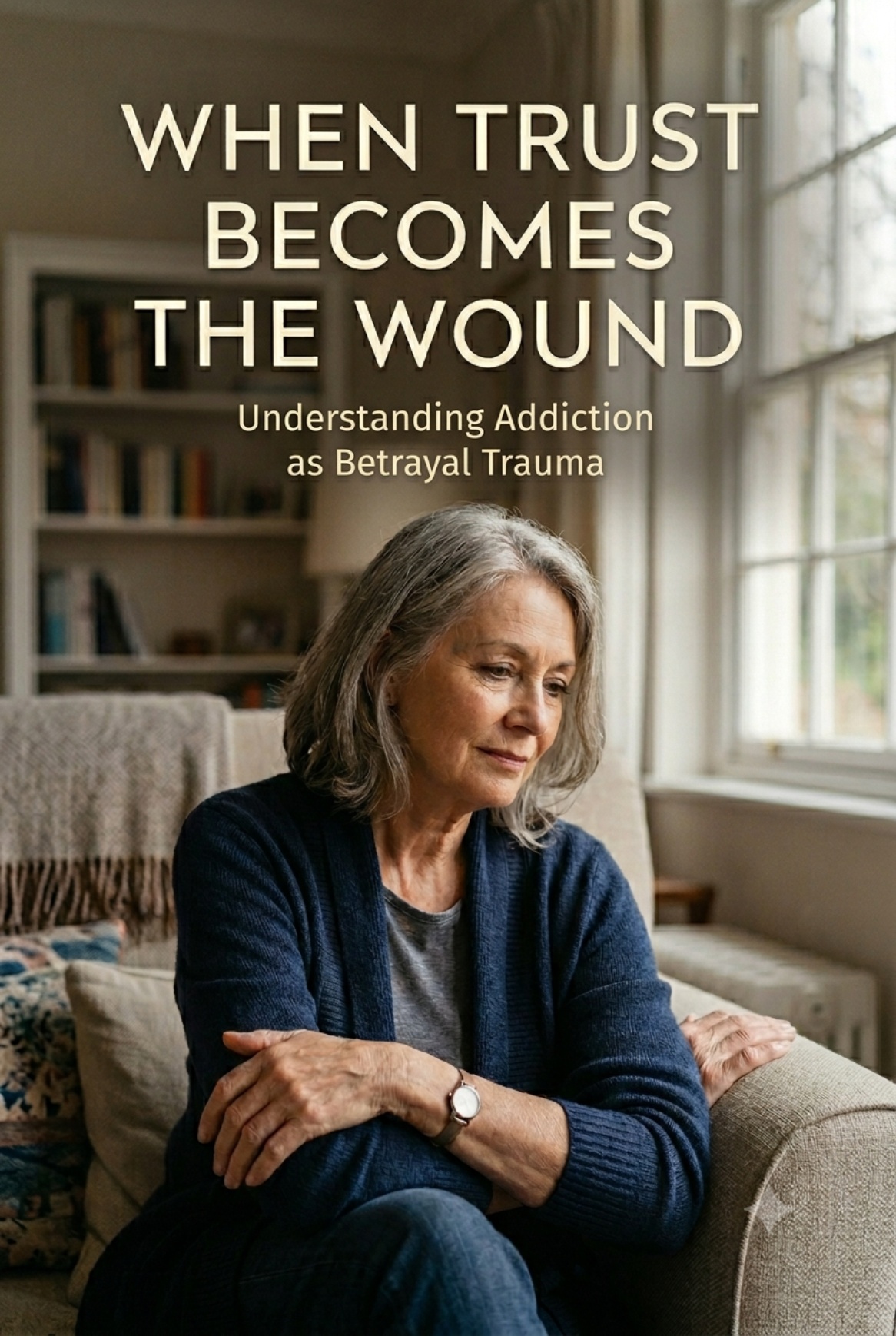
When Trust Becomes the Wound

A compassionate guide for women over 60 healing from a partner’s addiction: understanding what happened, rebuilding yourself, moving forward.
About This Product
If you have spent years loving someone with an addiction, you may be carrying a pain no one has named for you. You may have been told you were enabling him, that you were too sensitive, or that you should have left sooner or stayed longer. You may have lost trust, money, health, faith, and your sense of who you are, and you may have gone through all of it quietly, with no one to talk to.
When Trust Becomes the Wound explains what happened to you. It treats a partner’s addiction as what it often is for the woman living beside it: betrayal trauma. Written for women over 60 by licensed mental health counselor Kim Salsman, this guide gives clear, plain-language explanations in place of blame.
Inside, you will find:
A clear explanation of addiction as a brain condition, and why love, promises, and patience did not fix it
What betrayal trauma is, how it shows up in your mind and body, and why it is so hard to see from the inside
The many forms betrayal can take: lies and secrets, financial harm, sexual and pornography addiction, health risks, emotional erosion, spiritual injury, and the effect on your children and grandchildren
Why blame, shame, and the label “enabler” are unfair, and how patterns like DARVO and codependency language have been used against women
Honest chapters on grief, self-care, support groups, professional help, and setting boundaries
Growth after betrayal: rebuilding your identity apart from the marriage, finding purpose, and making room for joy
A resource list of support groups, therapist directories, further reading, and financial help
The book has five parts and twenty short chapters. Each chapter opens with a quote and is broken into short sections, so you can read a little at a time. You can read in order or start with the chapter that fits where you are today.
The benefit is clarity and relief. You will have words for what you lived through, a better understanding of why you reacted the way you did, and a path forward that does not depend on whether you stayed or left.
This book is for education and reflection. It is not therapy, counseling, or medical treatment, and it does not replace a qualified professional. It was written to sit beside that help.
If you are tired of being asked what you did wrong, this book starts somewhere else: what was done to you, how it affected you, and what healing can look like at any age. You are not too old. It is not too late. And you are not alone.
What's Included
- Addiction as Betrayal
Who It's For
This book is for women over 60 whose husbands or partners struggle, or once struggled, with addiction. That includes alcohol, drugs or prescription pills, sexual addiction and pornography, and gambling. It is for the woman who is still in the marriage, the woman who has left, the woman who is deciding, and the woman who is only now putting a name to what happened. It is also for friends, family members, and counselors who want to understand what these women have been through. It is not a crisis service or a replacement for therapy.
How to Use It
Before you begin Read “A Note to the Reader” and “A Trauma-Informed Note” first. Pick a quiet time and place, and set aside 20 to 30 minutes. Keep a notebook beside you, or a notes file on your device. Decide ahead of time who you could call if a chapter stirs up strong feelings. Read Part One first, because it lays the foundation. After that, you can read in any order. Choose a pace Steady: one chapter a week, about 20 weeks. Faster: two chapters a week, about 10 weeks. Gentle: one short section at a time, stopping whenever you need to. Stopping and coming back later is fine at any pace. How to read each chapter Read the opening quote and ask yourself whether it sounds like you or someone you know. Read one section at a time, and pause after each heading. Mark or write down any sentence that feels true. After the chapter, write three short notes: what felt true, what surprised or stirred you, and one thing you want to remember. Notice your body as you read. Tight chest, held breath, and tears are all information, not mistakes. Re-read the short set-apart statements in the chapter. They sum up each main point. Part by part Part One, Understanding What Happened (Chapters 1 to 3): What addiction is, how it became your story too, and what betrayal trauma means. The goal is to name what happened to you. Part Two, The Many Faces of Betrayal (Chapters 4 to 10): Start with the chapters that match your experience, and skim the rest. These chapters can be heavy, so take extra breaks. Part Three, You Were Never the Problem (Chapters 11 to 13): Blame, shame, the “enabler” label, DARVO, and codependency. Write down the messages you were given, then decide which ones you are ready to set down. Part Four, The Path Back to Yourself (Chapters 14 to 17): Grief, self-care, support, and boundaries. This is the most practical part. After each chapter, choose one small step to try that week. Part Five, Growing Forward (Chapters 18 to 20): Growth, identity, purpose, and joy. Make a list of what you used to enjoy and what you might want to try now. Resources and Further Reading: Pick one support group or counselor from the list and make contact this week. When it gets heavy Stop reading. The book itself says you may pause, skip, or step away. Put both feet on the floor, breathe slowly, drink some water, or take a short walk. Reach out to a counselor, a trusted person, or a support group listed in the Resources. If you feel unsafe or have thoughts of harming yourself, call or text 988 (in the U.S.) or call your local emergency number. After you finish Read “A Closing Word” and the section “A Letter to Your Future Self.” Write a short note to yourself about where you are now. Return to any chapter whenever you need it. Consider sharing what you learned with a counselor or support group.
After your purchase you will receive an email with a link to download your files. You can also find them at any time under My Purchases in your TherapyCloud account.
Frequently Asked Questions
Will this book help men who were betrayed? Or individuals younger than 60?
Yes. Though written for women over 60, the information is beneficial to men as well. Even younger individuals can benefit. Other readers can utilize the majority of information to learn, heal, and grow.
Important Information
© 2026 Kim Salsman/The Second Spring. All rights reserved. For the purchaser’s personal use only. Do not copy, share, resell, or post any part of this book online without written permission. For education and reflection only; not therapy, counseling, or medical advice.